


The Silent Module Killer: Why Voltage is Your Most Important Tool
Mar 27th 2026
You’ve got the $3,500 programmer.
You’ve got the bypass cables.
You’ve got a customer standing over your shoulder—in the rain.
You hit “Program.”
The progress bar climbs… 50%… 75%…
Then—Communication Error.
The dash goes dark.
The fuel pump starts that rhythmic death-click.
The original key? Dead.
Congratulations—you didn’t just lose a job.
You likely bricked a module, and your $250 quick flip just became a $2,000 nightmare.
The Real Problem (Hint: It’s Not Your Tool)
Most locksmiths—especially newer techs—blame:
- The programmer
- The vehicle
- A “junk” aftermarket key
But in 90% of failures, the real culprit is something far more basic:
Voltage Drop
Why 12.6V Is NOT Safe for Programming
A fully charged battery sits at 12.6 volts. Sounds good, right?
Not even close.
The moment you turn the ignition to ON:
- BCM wakes up
- ECU modules come online (often 40+)
- HVAC, lighting, and accessories start pulling load
Now add:
- A 10–15 minute security delay (Ford, etc.)
- A heavy coding session (BMW, Mercedes, VAG)
That 12.6V quickly drops into dangerous territory.
The “Digital Cliff” That Bricks Modules
Modern vehicles don’t tolerate weak voltage.
There is no “low signal.”
There is only:
- ✅ Communication
- ❌ Failure
When voltage drops below ~11.5V, you hit what pros call:
The Digital Cliff
At that point:
- CAN communication becomes unstable
- Modules can’t complete commands
- Data transfer gets interrupted
And if that interruption happens while:
- A module is erasing
- A key is being written
- Firmware is being updated
You’re no longer programming…
You’re corrupting memory.
That’s how modules get bricked.
Why a Trickle Charger Won’t Save You
If you’re still using a $50 charger, here’s the truth:
It’s the wrong tool for the job.
Chargers are reactive:
- Wait for voltage to drop
- Then try to recover
Programming requires proactive power:
- Constant voltage
- Clean output
- No fluctuation
During programming, even tiny dips can cause failure.
The Real Solution: Voltage Stabilization
What you actually need is a:
Flash Power Supply (Programming Power Supply)
This isn’t a charger—it’s a voltage stabilizer.
It:
- Locks voltage at a fixed level
- Provides clean, filtered power
- Prevents dips during programming
Recommended Tool: 100 Amp Programming Power Supply
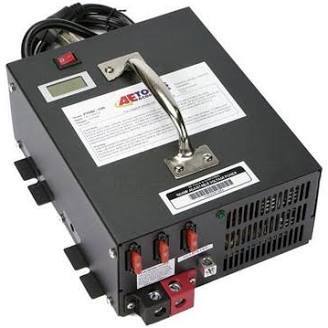
AE Tools Variable Voltage Power Supply 100 Amp For Programming: $625.00
For serious locksmiths, a high-amperage variable power supply is non-negotiable.
Why 100 Amp Matters:
- Handles high module load
- Maintains voltage under stress
- Supports long programming sessions
If you’re working modern vehicles daily, this isn’t optional—it’s insurance.
Field-Proven Rules Every Locksmith Should Follow
1. Kill the Power Drains
Before you even start:
- Turn off DRLs
- Kill HVAC
- Shut down radio
If it’s not required for programming, it shouldn’t be on.
2. Hook Up BEFORE You Start
Don’t wait for:
- Low battery warnings
- Voltage alerts
Connect your power supply before plugging into OBDII.
3. Stay in the “Goldilocks Zone”
Set your voltage to:
13.6V
Why?
- High enough to prevent drops
- Safe for vehicle electronics
- Ideal for most manufacturers
The Cost of Ignoring Voltage
Let’s be real:
- One failed job = $1,000–$3,000 loss
- One bricked module = lost customer + reputation damage
- Repeat failures = no referrals, no growth
All because of something preventable.
You don’t program a vehicle without stabilized voltage.
Final Takeaway
Respect the voltage…
Or the voltage will disrespect your bank account.
- Stop charging
- Start stabilizing
- Use the right equipment